
Autonomous Team
Owns the autonomy software: perception, mapping, path planning and control, tested in simulation and on the car.
Lead · Milad Abdi
We write the ROS 2 software that turns sensor data into steering and speed commands. We test path tracking, obstacle avoidance and mapping in simulation before running them on the cars.
Members · 12 Milad Abdi · Athanasius Liu · Cole Johnson · Eshean Arumainathan · Felix Kuzminski · Fraser Kent · Hendrick Custodio · Hudson Regis · Keyla Wijesinghe · Nathan Jacobson · Rafael Feng · Vince Ong
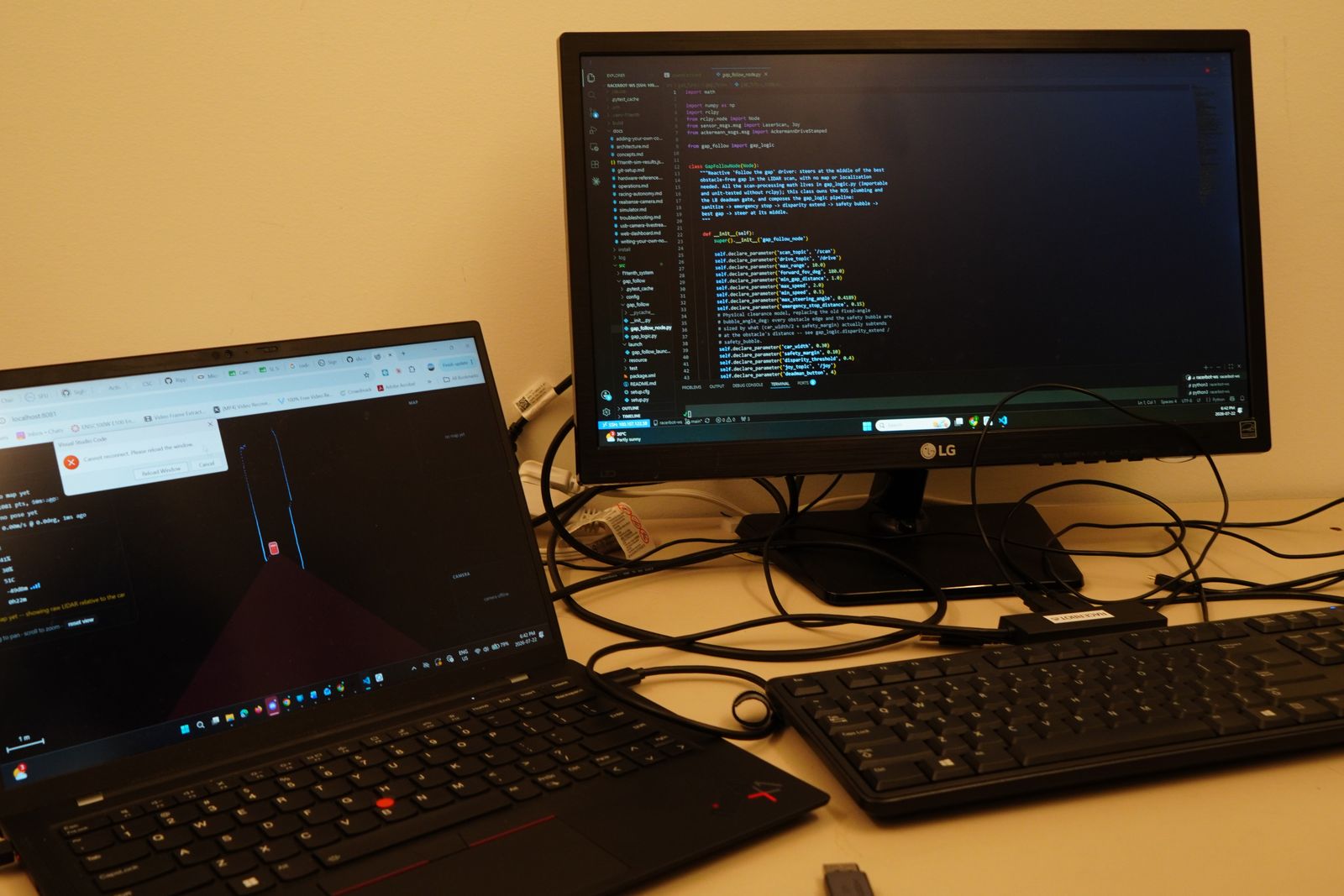
What we work on
- CodeWe write the ROS 2 and Python software that turns sensor data into steering and speed commands. Members work on Follow the Gap, path selection, controller tuning and the checks that keep those commands within the car’s limits.
- PerceptionWe use LiDAR data to work out what is around the car. That includes building maps, finding open space and checking that noisy sensor readings do not send the car the wrong way.
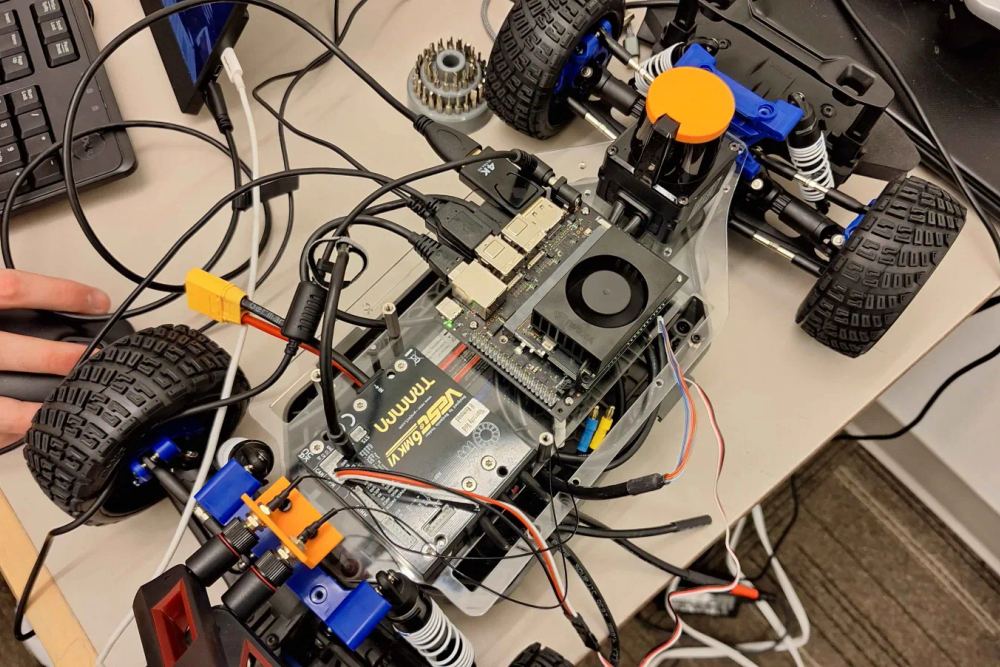
- Vehicle testingNew code starts in simulation and recorded data before it reaches the vehicle. We compare runs, look into failures and repeat the same tests so we can tell whether a change actually helped.
Skills
ROS 2 and Python · LiDAR perception · Mapping and localization · Path planning · Controls and tuning · Simulation and testing
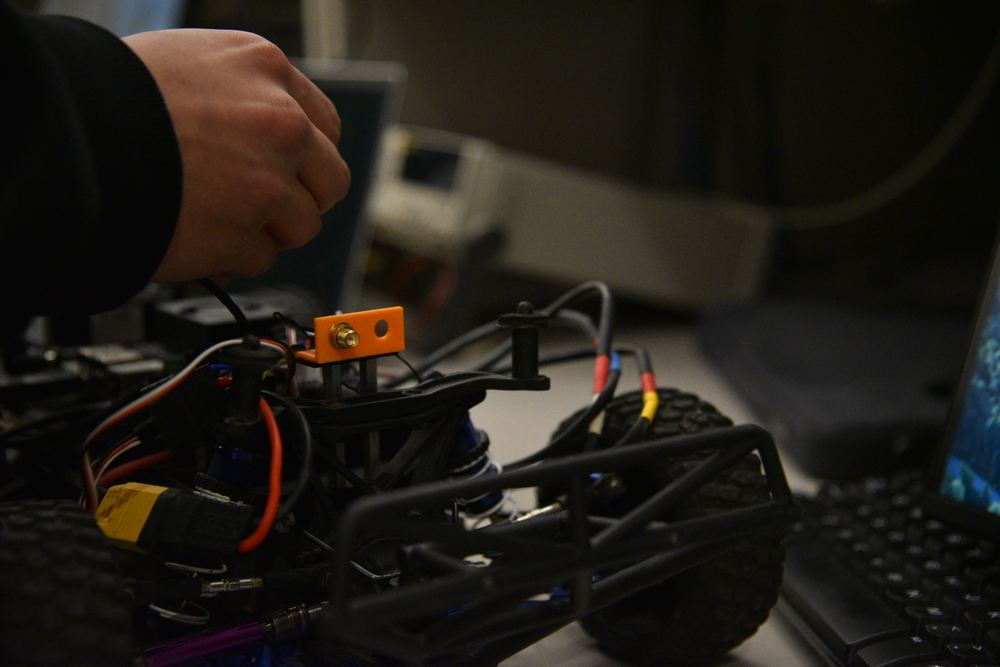
Photos
Active · 6
-
Pure pursuit
Test path tracking on the centreline and an optimized racing line. The waypoint setup now includes the Python packages needed on the car; on-car testing is next.
-
Obstacle detection
Test detection and avoidance of other cars in solo and head-to-head runs. We are investigating why Follow the Gap behaves differently inside the obstacle-detection code than it does on its own.
-
Least-squares steering validation
Test steering that fits a curve through the selected gap rather than aiming at its furthest point. We are reviewing whether to keep this method separate from reactive pure pursuit.
-
Mapping and localization
Build track maps and localize the car with a particle filter. Localization works in simulation with the optimized line. The map loader still needs to ignore an extra line written by the map saver.
-
Time-to-collision braking
Continue work on the safety node that brakes when the car gets too close to an obstacle.
Show all 6
-
Automated build checks
Add a colcon build to every pull request in the Autonomous Team repository.
Completed · 10
-
Head-to-head simulator
Added a second car with its own LiDAR, shown in a different colour. The opponent can be repositioned to repeat the same test.
-
Follow the Gap and Disparity Extender updates
Tuned and cleaned up both algorithms and matched the launch parameters to the code.
-
UVic race preparation
Tested pure pursuit on the centreline and optimized line, obstacle detection in solo and head-to-head runs, Follow the Gap, least-squares steering and Disparity Extender parameters, including on a wider track.
-
On-car launch guide
Wrote instructions for launching the Autonomous Team's algorithms on the car.
-
Simulator Map Set
Added six simulator map image and configuration sets for F1TENTH Gym. Also added a greyscale conversion tool and instructions for creating, modifying and switching maps.
Show all 10
-
Follow the Gap Pipeline
Implemented LiDAR preprocessing, obstacle extension, gap selection and safety-bubble behaviour for Follow the Gap. Refactored the gap-finding stages and tuned range-and-angle-based speed control.
-
Reactive Safety Controls
Added deadman-gated driving and time-to-collision braking controls to the reactive and FTG launch paths. Exposed the TTC setting for controlled testing while retaining the launch-time safety wrapper.
-
Disparity Extender Package
Created the ROS 2 package structure for Disparity Extender and restored it to the current repository. Earlier reactive work also improved obstacle extension accuracy and exact steering-angle calculation.
-
Least-Squares Steering
Implemented a polynomial least-squares solver that converts selected gap points into steering and speed commands. Added NaN protection, lookahead and steering clamps, ROS 2 parameters and a furthest-point fallback.
-
Contribution and Research Policy
Added repository policies that connect major changes to research notes and require reviewed pull requests for assigned work. This creates a written process for preserving test results and development decisions.